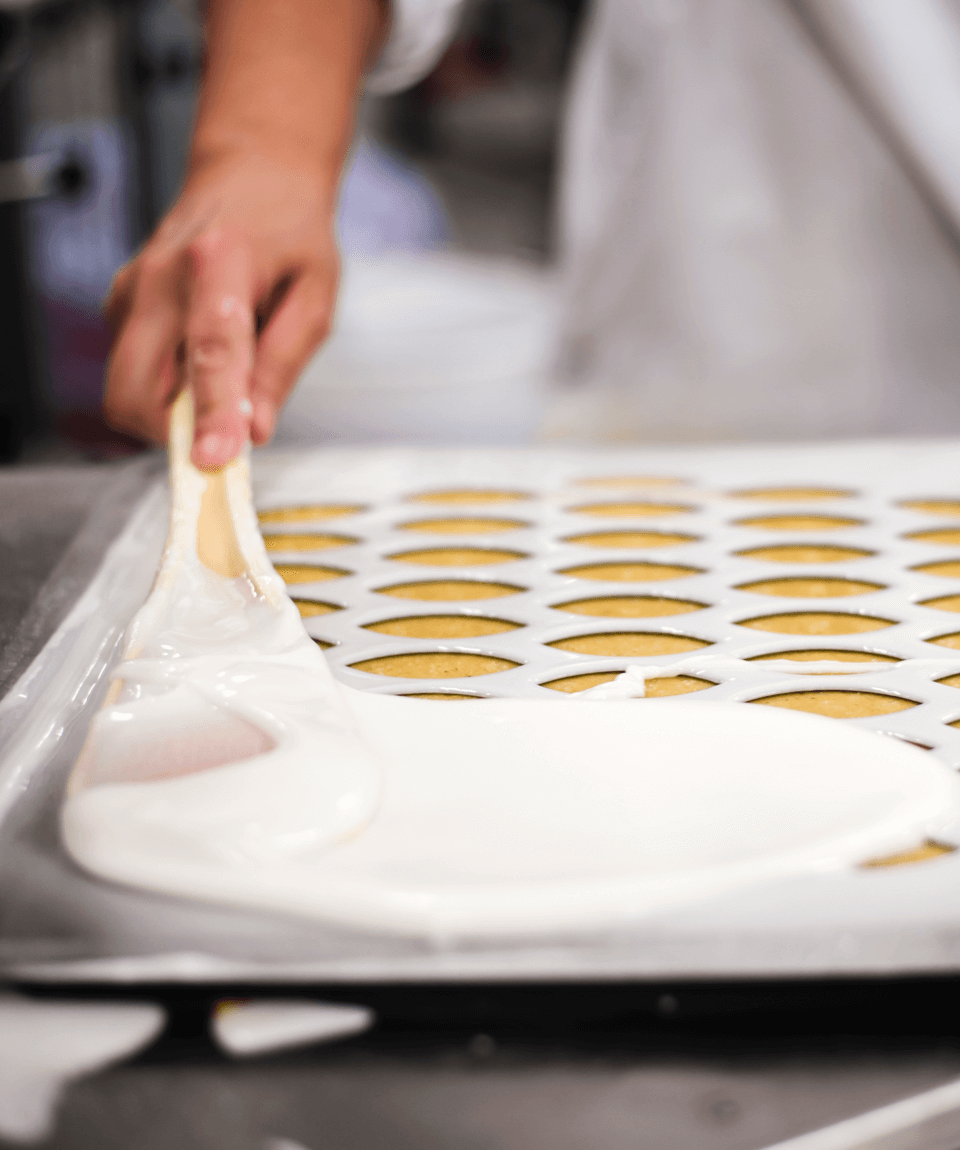
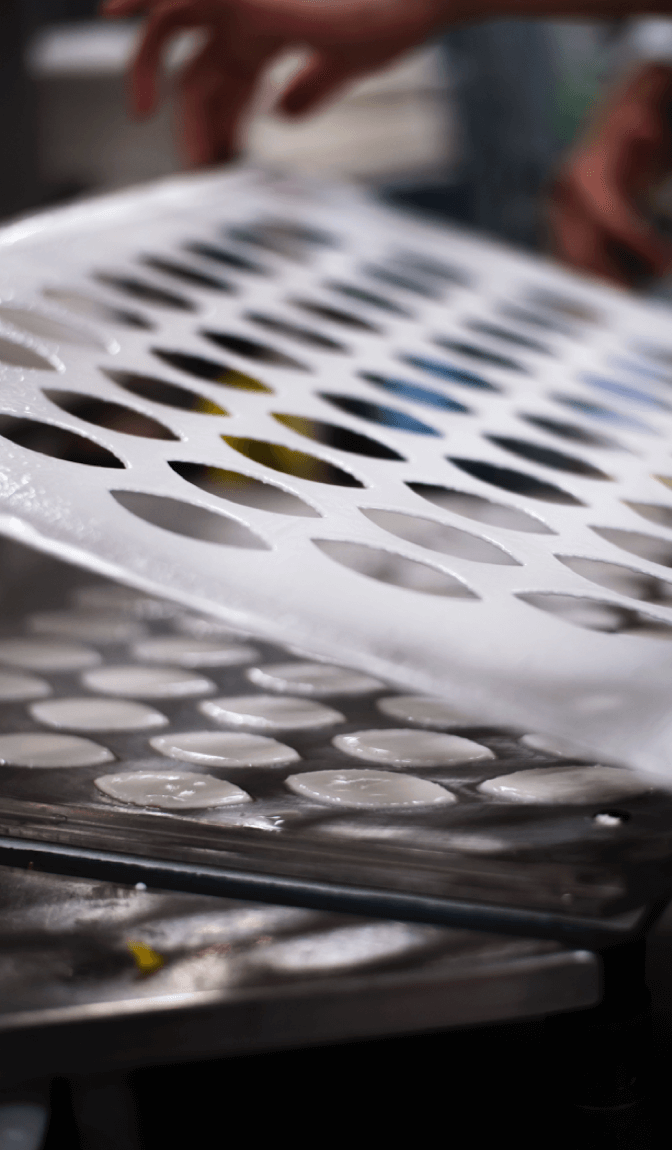
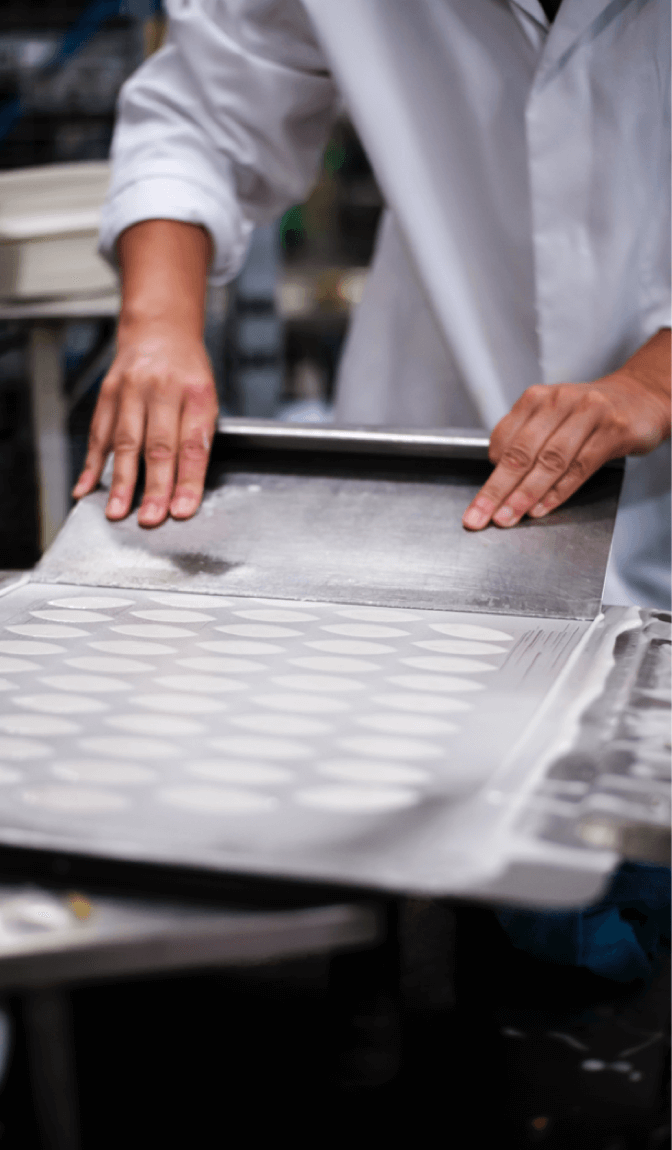
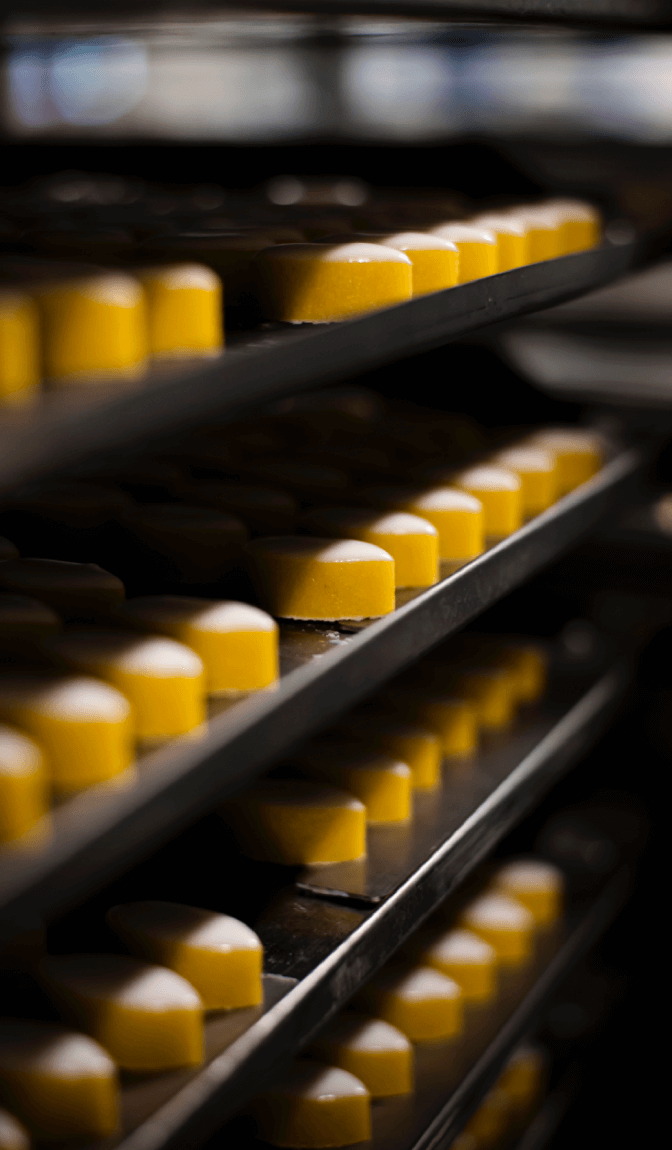
Since 1920, the know-how of the Confiserie le Roy René has been passed down through the ages, without being lost, and it perpetually strives to improve. Making with passion sweets that pay tribute to Provencal traditions, its creations are based on ancestral recipes whose gestures are perpetuated from generation to generation. Artisans nougatiers and calissioniers repeat the same meticulous and precise movements allowing the realization of exceptional sweets.
UN SIÈCLE
DE DOUCEUR
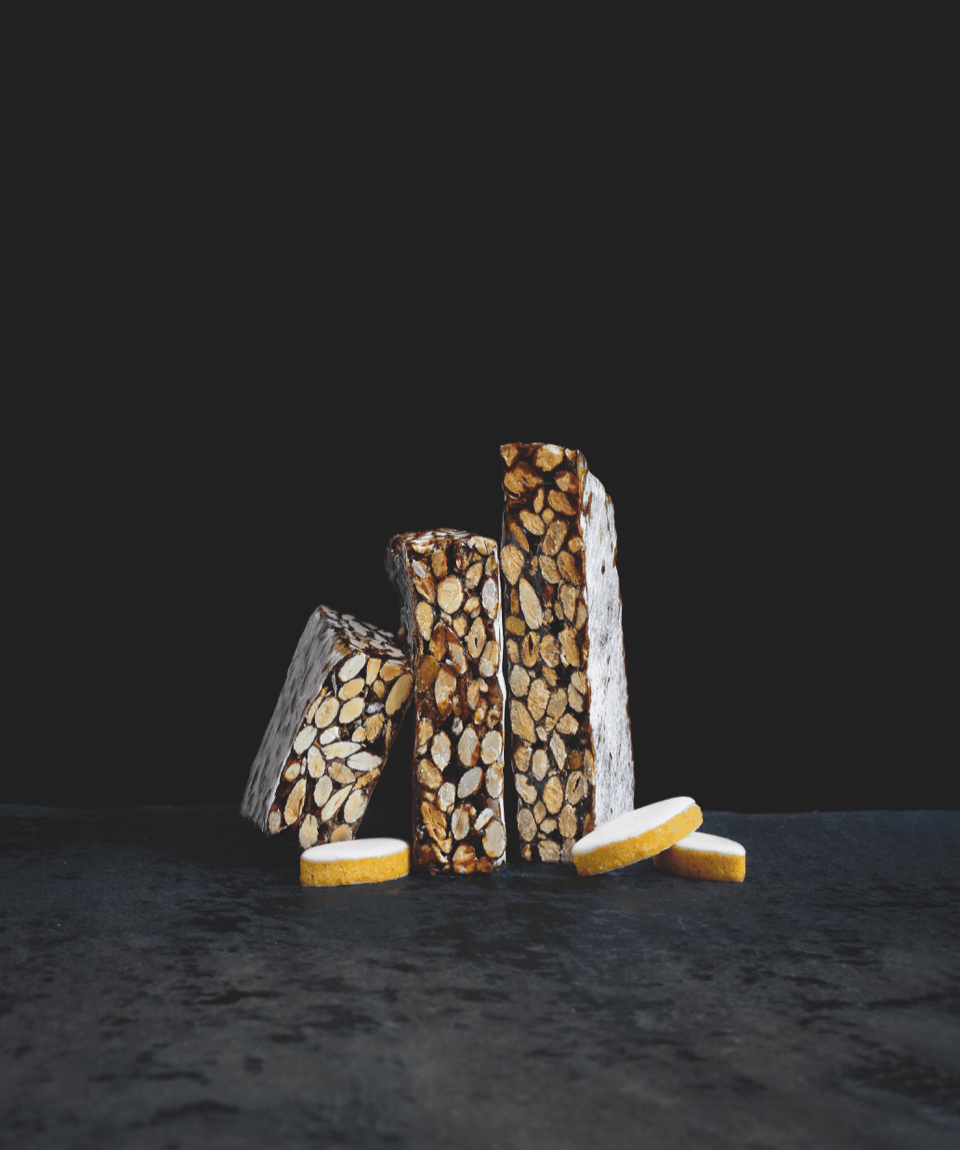
Black, it is made with almonds and honey IGP Provence. It is this last one, carried to boiling which gives him its color. This nougat is the one we used to prepare at home to make it proudly appear in the cohort of the thirteen Christmas desserts. 1] The white one is made of almonds, pistachios and honey of lavender IGP Provence to which comes to be added the tenderness of the egg whites assembled in snow.
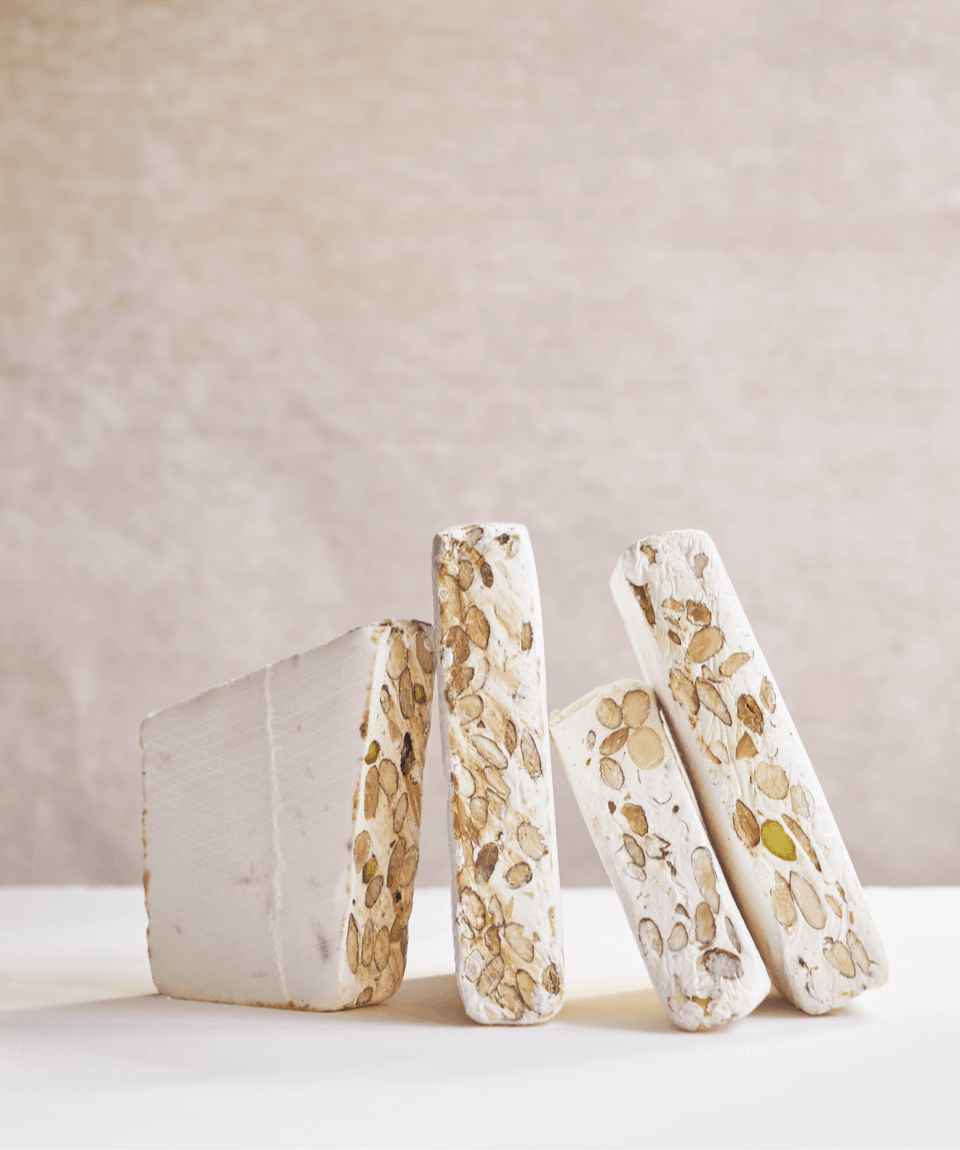
To the nirvana of the original nougats, the mastery of fantasy nougats has enriched the collection. Organic with lemon peel, orange peel, pistachio, blackcurrant and raspberry, and even calisson, new and delicious flavours that reinvent the delicacy. 1]
One does not improvise oneself as a nougat maker, one inherits one's know-how from one's predecessor. Because more than a profession, being a nougat maker is to practice an art for which only the transmission from man to man can give the keys. Depending on the humidity and the ingredients, it is necessary to adjust the cooking and the tempo. Nougats are not made in the same way in autumn and spring.
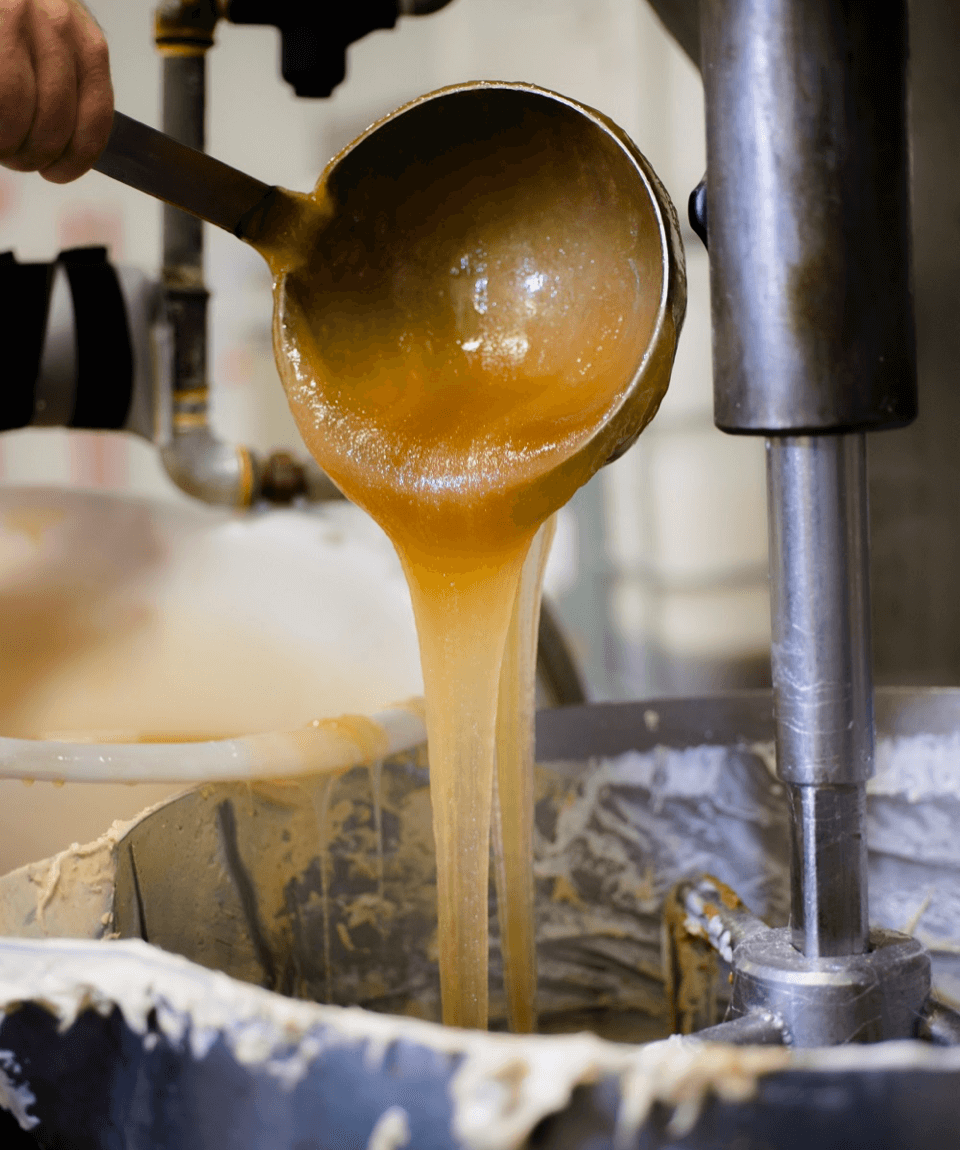
Il faut porter le miel à son point de fusion dans le chaudron jusqu’à ce qu’il forme une petite boule entre les doigts. Monter au bain-marie des blancs en neige, avec un peu de miel, jusqu’à foisonnement. Parallèlement, il faut préparer le sirop, fait d’eau, de sucre et de glucose, qui lui aussi doit être à la température parfaite. C’est l’incorporation de tous ces éléments au juste moment qui va donner à la pâte à nougat sa texture moelleuse et aérienne.
Patrice Alibert, pâtissier chocolatier.
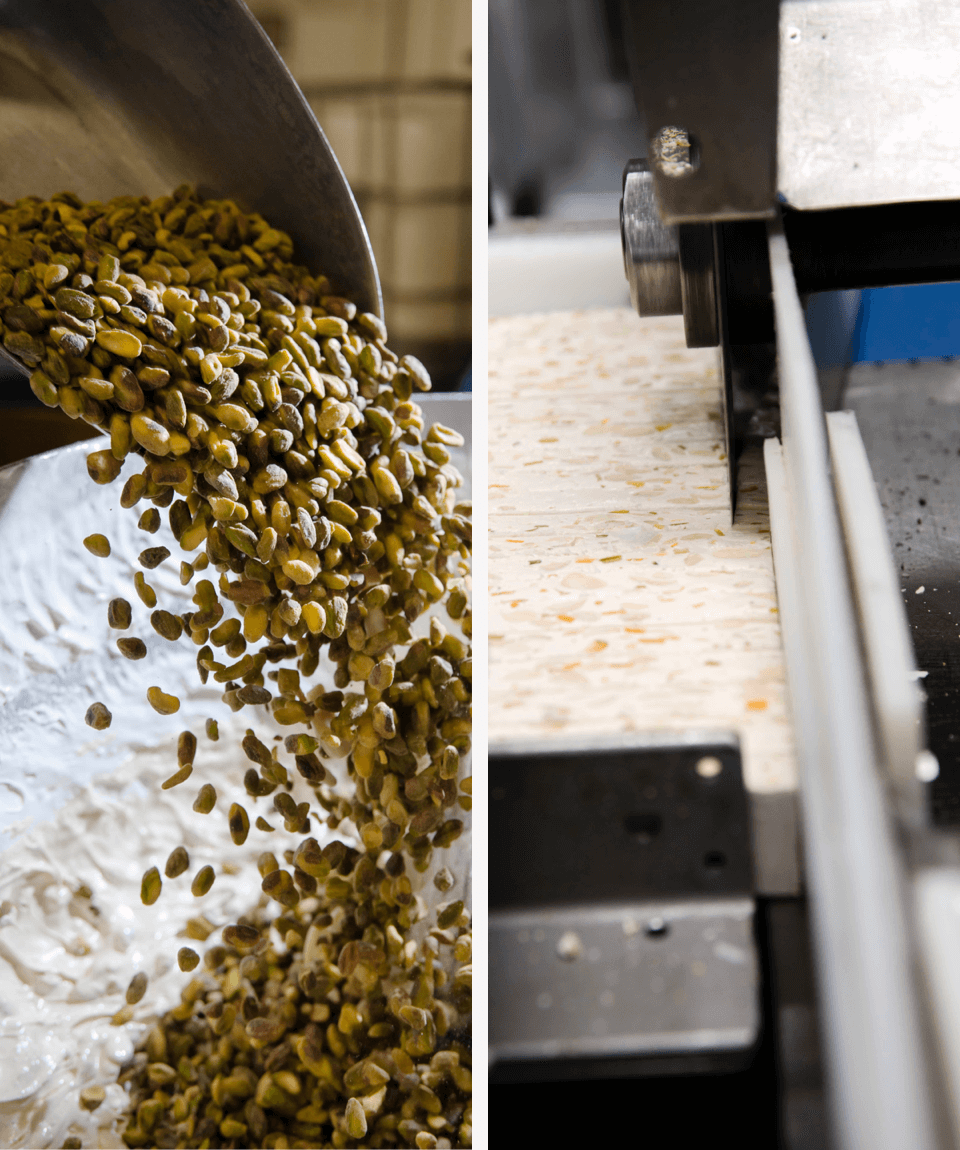
Once rolled out in large moulds lined with unleavened bread, the nougat must be left to set for twenty-four hours before being cut into rectangles or small squares of pleasure.
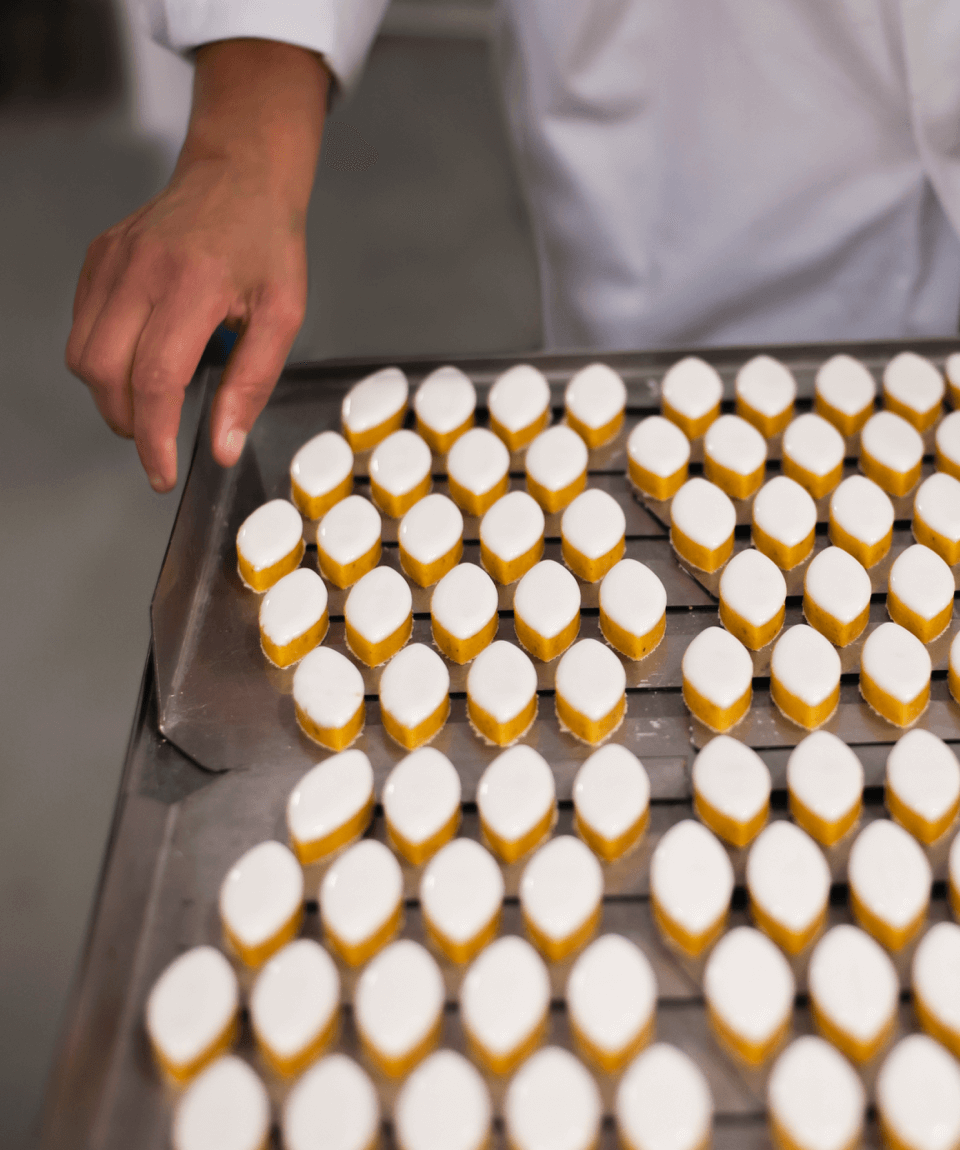
LE CALISSON D'AIX
13,3 GRAMMES DE PLAISIR
L’art et la manière de confectionner ces friandises ont traversé les siècles. Depuis 1454, c’est encore et toujours la même formule magique qui fait loi : à 1/3 d’amandes, mêlez 1/3 de melon confit d’Apt, et 1/3 de sirop de sucre bien chaud.
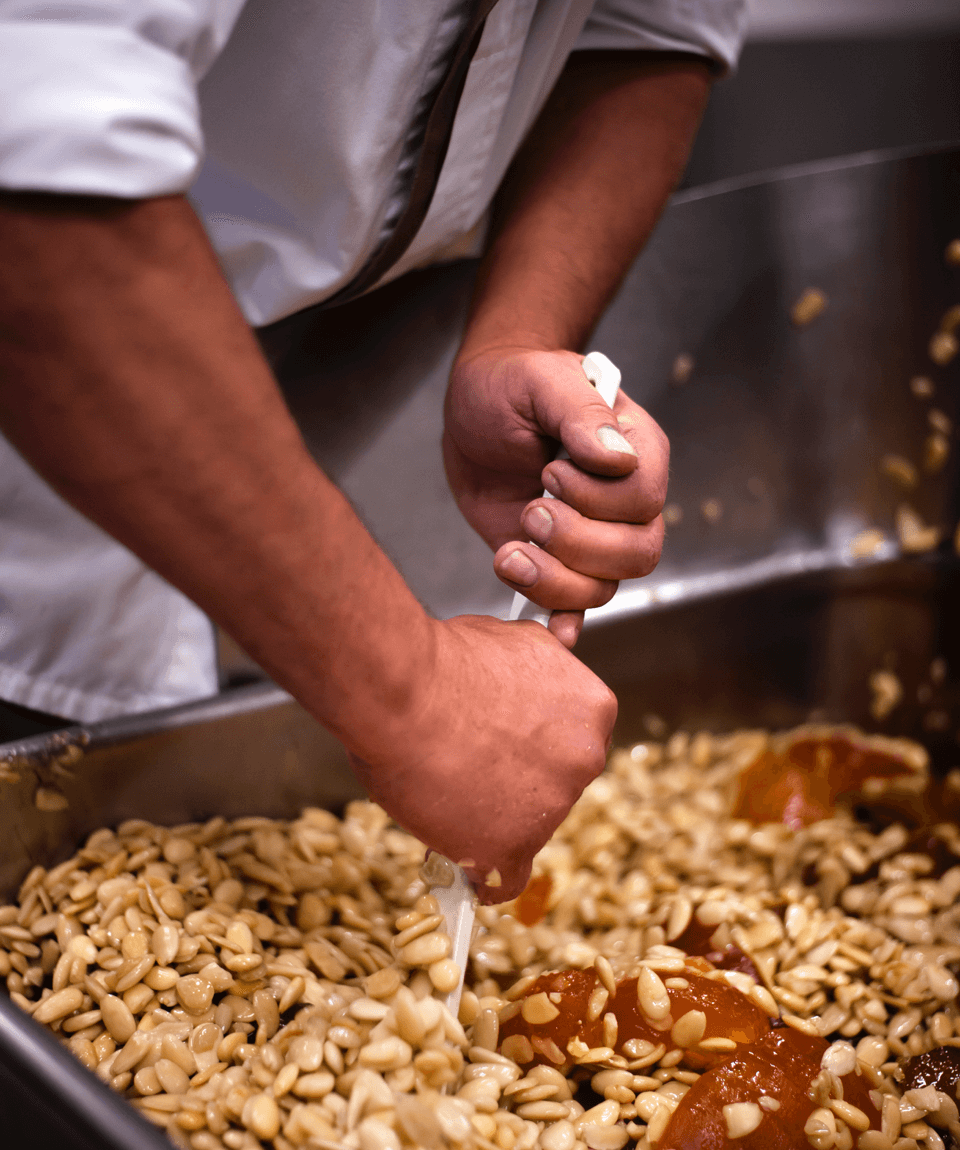
Nos artisans passionnés qui répètent les gestes qu’on leur a appris, mélangent les amandes au melon de Cavaillon confit puis ajoutent un sirop de sucre chaud pour former la pâte à calisson.